What are the most innovative wearable devices taking us beyond smartwatches?
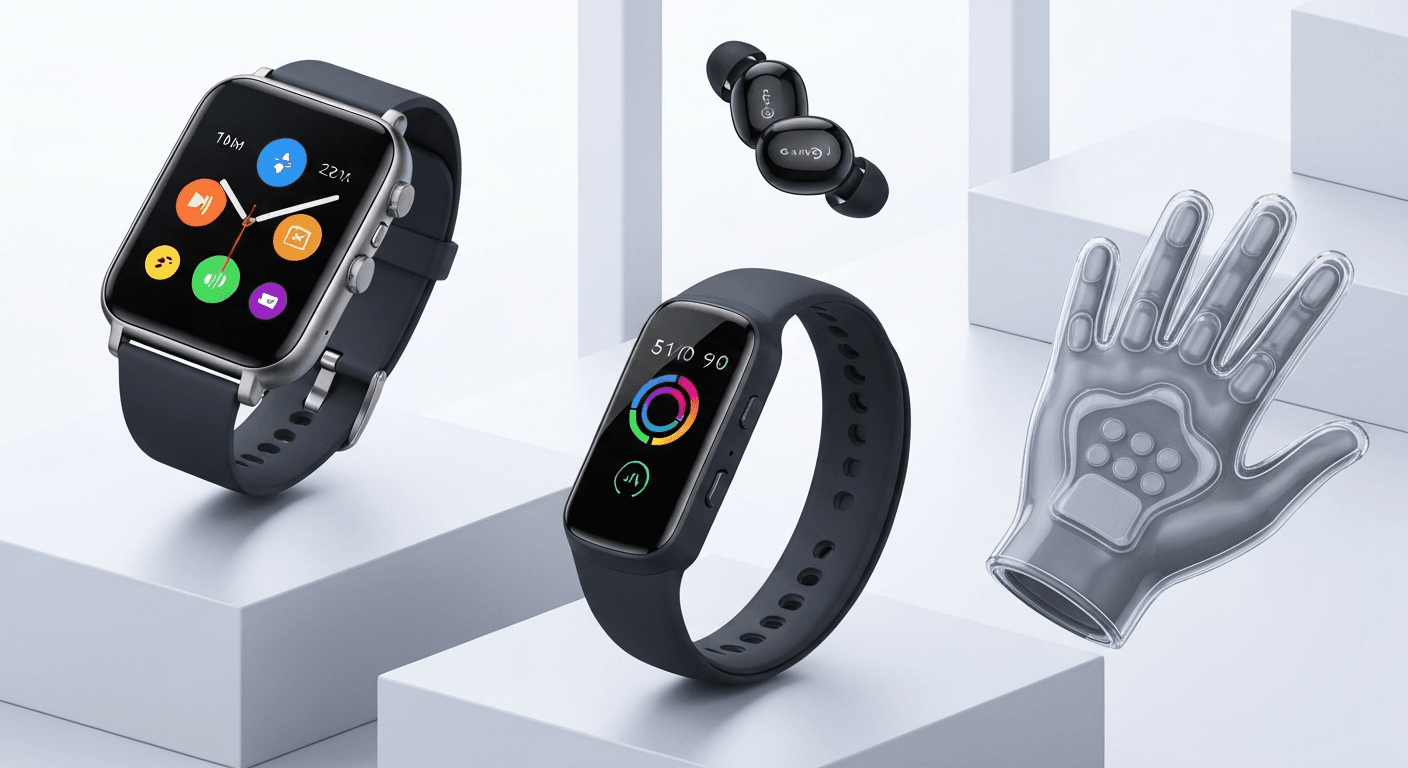 For years, the smartwatch has reigned supreme on our wrists, dutifully tracking steps and delivering instant notifications. However, a massive technological shift is currently unfolding. This shift promises to integrate digital intelligence even deeper into the fabric of your daily life.
We are rapidly moving past simple fitness trackers into a thrilling new era of truly immersive technology. As this landscape expands, you might find yourself wondering: What are the most innovative wearable devices? The answer lies in a diverse new wave of gadgets.
These devices are designed to revolutionize everything from your personal health metrics to how you interact with the world. These cutting-edge tools are no longer just accessories. They are becoming powerful extensions of the human experience.
In this article, we will explore groundbreaking inventions ranging from discreet smart rings and augmented reality glasses to sophisticated biosensors. You will discover how these specialized devices offer unique capabilities. Prepare to redefine your understanding of connectivity as we dive into the future of wearables.
Top 7 Beyond Smartwatch Wearable Devices
The landscape of personal technology is rapidly evolving. When consumers ask, “What are the most innovative wearable devices?“, the answer now extends far beyond traditional smartwatches. Today's market features spatial computers, smart jewelry, and screenless AI tools.
1. Apple Vision Pro
The Apple Vision Pro represents a paradigm shift in spatial computing. Powered by visionOS and dual-chip M2 and R1 architecture, it blends digital content with the physical world.
Through its advanced display and sensor array, it offers immersive experiences. It redefines how users interact with digital environments for work and entertainment.
2. Humane Ai Pin
The Humane Ai Pin is a bold step toward a screenless future. This wearable uses AI and voice commands to provide information and perform tasks.
It projects interfaces directly onto the user's hand. It offers a unique, privacy-focused interaction model that reduces screen time dependency.
3. Meta Ray-Ban Smart Glasses
Meta’s Ray-Ban Smart Glasses integrate a camera, speakers, and microphone into a stylish frame. They allow users to capture media, listen to music, and take calls hands-free. The device leverages advanced AI features to enhance functionality without compromising on style.
4. Oura Ring Gen3
The Oura Ring Gen3 is a sophisticated health tracker housed in a discreet ring. It monitors sleep, activity, and readiness levels through advanced sensors (PPG). The companion app provides personalized insights, making it ideal for unobtrusive health monitoring.
| Device | Primary Focus | Key Technology |
|---|---|---|
| Apple Vision Pro | Spatial Computing | M2 & R1 Chips, visionOS |
| Humane Ai Pin | AI Assistance | Laser Projection, Voice AI |
| Oura Ring Gen3 | Health/Sleep | Advanced Biosignal Sensors |
| Whoop 4.0 | Performance | Strain & Recovery Tracking |
5. Whoop 4.0
Whoop 4.0 is a performance optimization wearable designed for athletes. It tracks physiological data like heart rate variability, sleep, and strain. It lacks a screen, focusing entirely on data collection and analysis to help users understand recovery.
6. Shiftall Pebble
The Shiftall Pebble is a compact wearable designed specifically for remote communication. Featuring a microphone and speaker, it enables seamless, intimate conversations. It aims to bridge physical distances through constant audio presence with people wearing similar devices.
7. Coros PACE 3
The Coros PACE 3 is a lightweight and durable GPS running watch. While it shares the watch form factor, it distinguishes itself by focusing strictly on metrics. It offers advanced training metrics and exceptional battery life for endurance sports enthusiasts.
The Evolving Landscape of Wearable Technology in 2026
In 2026, the wearable market is transcending basic fitness tracking. Devices now offer specialized functions and insights, moving far beyond simple notifications. They are becoming deeply integrated into daily life.
When asking what are the most innovative wearable devices?, the answer lies in new form factors. These blend seamlessly with fashion and AI-powered assistants. These assistants anticipate user needs rather than just reacting to commands.
The most significant leap is in health monitoring, which now approaches medical-grade accuracy. Modern wearables utilize advanced biosignal sensors like PPG for heart rate variability. They also use EMG for muscle activity and EEG for brain wave monitoring.
Innovations now allow for continuous blood pressure and glucose monitoring without invasive equipment. This revolutionizes how patients and providers manage chronic conditions. It is particularly effective for diabetes and hypertension management.
Beyond health, the focus is on personalization and context-awareness. Wearables now provide proactive health coaching based on real-time biometric data. Augmented reality overlays offer relevant environmental information.
Smart assistants handle complex tasks effortlessly. This shift ensures technology serves the user intuitively. It moves beyond simple notifications to become indispensable life companions.
| Feature | Traditional Wearables | 2026 Innovative Wearables |
|---|---|---|
| Sensors | Basic Heart Rate & Steps | PPG, EMG, EEG, Glucose |
| Interaction | Reactive Notifications | Proactive AI Assistance |
| Health Focus | General Fitness Tracking | Medical-Grade Disease Mgmt |
Connectivity and interoperability are also key trends for 2026. Devices work seamlessly with other smart platforms, creating an interconnected ecosystem. This allows for richer data collection across devices.
However, wearables handle increasingly sensitive personal data. This ranges from ECG readings to real-time location. Therefore, security and privacy remain paramount to ensure user trust in this landscape.
Choosing the Right Innovative Wearable for You
When asking “What are the most innovative wearable devices?”, the answer depends on your goals. Are you focused on advanced health metrics or immersive digital experiences? Identifying your core use case is the first step.
You must decide if you need a device for specialized communication. Alternatively, you may need one that acts as a comprehensive health guardian. Evaluate the specific technology offered by each device.
Look for innovations that align with your lifestyle. If you want a transformative digital experience, the Apple Vision Pro is the leader. Those seeking to reduce screen time might lean towards the Humane Ai Pin.
For health enthusiasts, devices like the Oura Ring offer physiological data. This comes without the distraction of a screen. Modern wearables utilize advanced biosignal sensors like PPG and ECG.
These sensors track heart rate variability, sleep quality, and stress levels. As noted in market analysis, the industry is shifting towards medical-grade data. Some innovative options now offer continuous blood pressure monitoring.
Finally, consider factors such as comfort, battery life, and ecosystem integration. Since a wearable is worn daily, it must suit your personal style. Long battery life is crucial for continuous tracking, especially for sleep analysis.
| User Profile | Primary Goal | Recommended Tech Focus | Key Features to Look For |
|---|---|---|---|
| Health Optimizers | Deep physiological tracking | Smart Rings / Advanced Trackers | PPG sensors, Sleep staging, HRV, Recovery scores |
| Tech Early Adopters | Spatial computing & Immersion | XR Headsets (e.g., Vision Pro) | High-res displays, Gesture control, AR integration |
| Minimalists | Screen-free assistance | AI Pins / Pendants | Voice-activated AI, Laser projection, Cellular connectivity |
| Chronic Care | Medical monitoring | Clinical Wearables | Continuous Glucose Monitoring (CGM), BP tracking, ECG |
FAQ (Frequently Asked Questions)
Q1: What defines an innovative wearable device?
A1: Innovative wearables go beyond basic tracking. They utilize advanced sensors like EEG and spatial computing to integrate deeply into life. These devices act as active health guardians rather than passive notification centers.
Q2: Are these new wearable devices secure?
A2: Yes, most manufacturers prioritize security with robust encryption. Look for devices offering user-controlled data settings. This ensures you manage exactly how physiological information is stored and shared.
Q3: Will these devices work with my smartphone?
A3: Most wearables connect via Bluetooth and have apps for iOS and Android. Always check specific compatibility requirements before buying. This guarantees seamless integration with your existing digital ecosystem.
Q4: What is the biggest wearable trend for 2026?
A4: The main trend is AI-driven assistance without screens. Expect medical-grade health sensing capabilities to become standard. These advancements will blur the lines between digital and physical realms.
Conclusion
The wearable technology landscape is rapidly evolving far beyond traditional fitness trackers. Understanding what are the most innovative wearable devices is crucial for enhancing health. These groundbreaking tools offer seamless integration into our lives.
To benefit from these advancements, review the specific wearables discussed above. Identify which features best align with your personal goals. Consider how a smart ring or AR glasses can integrate into your daily routine.
Don't settle for outdated technology. Explore these cutting-edge options today to stay ahead of the curve. Upgrade your wearable experience now to unlock the full potential of personal technology.