
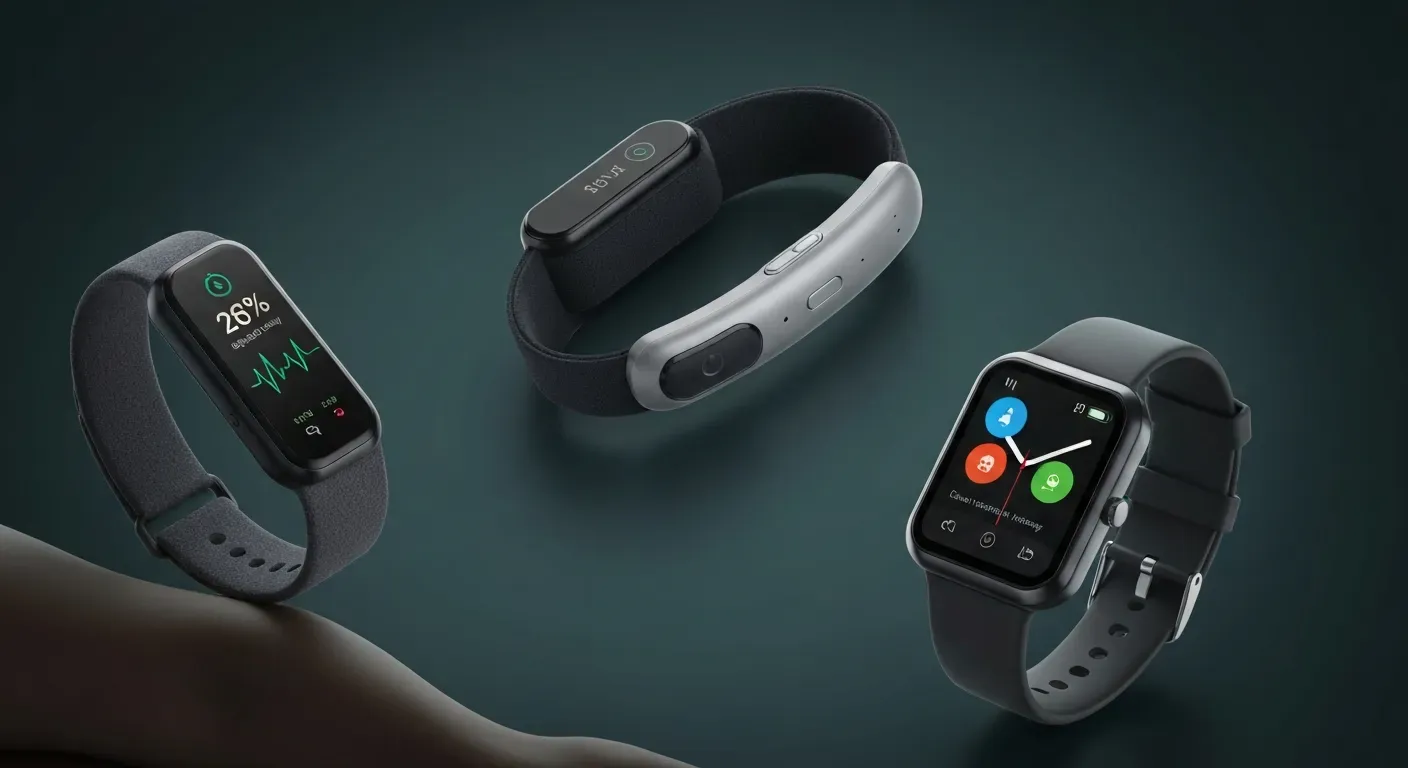
 Imagine if your smartwatch could alert you to rising stress levels long before you feel overwhelmed. For decades, assessing mental well-being has been a subjective and often delayed process, leaving many struggling to find proactive support when they need it most.
Welcome to 2026, where this is no longer science fiction. The latest generation of Wearable Devices For Mental Health is transforming this landscape by providing a continuous, objective window into your mind. These smart sensors offer unprecedented insights, turning abstract feelings into actionable data.
In this article, we explore the cutting-edge technology behind these AI-based sensors. You will discover the specific mental health biomarkers they monitor and understand how this innovation enables real-time assessment. Prepare to see how personalized digital health is reshaping the future of stress management.
The Rise of AI-Powered Wearable Sensors for Mental Health Monitoring
In 2026, psychiatry is shifting its focus toward objective data. Clinicians now use measurable biomarkers to understand conditions like anxiety and depression, reducing reliance on subjective patient reporting.
This new approach provides a clearer picture of an individual's mental state, driven by continuous data collection from advanced Wearable Devices For Mental Health.
Understanding Biomarkers in Psychiatry with Wearable Tech
Traditional mental health assessment often depends on a patient's memory and self-awareness, which can be unreliable. Wearable technology replaces this with objective biomarkers—physiological signals that correlate with mental states.
Signals like heart rate variability (HRV) or electrodermal activity (EDA) offer a direct window into the body's response to stress, mood changes, and emotional arousal.
| Monitoring Method | Subjective Reporting | Wearable Biomarkers |
|---|---|---|
| Data Type | Self-reported feelings, moods | Physiological data (HRV, EDA, cortisol) |
| Frequency | Episodic (e.g., weekly) | Continuous (24/7) |
| Objectivity | Low; subject to recall bias | High; based on direct measurement |
| Intervention | Reactive | Proactive and preventative |
AI-Based Wearable Sensors for Real-Time Assessment
AI-based wearable sensors are central to this evolution. These devices provide a continuous stream of physiological data, which an integrated AI component analyzes in real-time to detect subtle shifts. For example, a change in sleep patterns or heart rate can indicate a corresponding change in a person's mental state, alerting users or clinicians to potential issues before they escalate.
The Role of Machine Learning in Behavioral Parameter Analysis
Machine learning algorithms are essential for making sense of the vast amounts of data collected by wearables. These systems process complex information streams, identifying patterns in behavioral and health parameters that might otherwise go unnoticed. The algorithms learn an individual's unique baseline and can flag deviations that correlate with declining mental well-being, enabling early and effective intervention.
Passive Sensing for Continuous Health Parameter Tracking
Advanced wearables enable passive sensing, a method for unobtrusive, long-term monitoring of health parameters without requiring any action from the user. Devices track metrics like activity levels, sleep quality, and even social interaction (via phone usage patterns) in the background. This creates a holistic and uninterrupted view of an individual’s health over time.
Wearable Biosensor Technology: A Deeper Dive
Wearable biosensor technology is also advancing rapidly. New devices are now designed for the non-invasive analysis of biomarkers through sweat. These sophisticated sensors can measure stress hormones like cortisol directly from the skin. This development represents a significant step forward, offering biochemical data that complements physiological metrics for a complete mental health profile.
Multi-biomarker Wearable Biosensor for Sweat Analysis
This advanced biosensor represents a major leap for Wearable Devices For Mental Health. It enables non-invasive, real-time monitoring of key mental health biomarkers directly from sweat, analyzing compounds like tryptophan, tyrosine, and dopamine. This offers a direct view of the body’s neurochemical state without needing blood samples.
Key Features of Advanced Wearable Biosensors
The device integrates multiple components for reliable, on-demand data collection. A flexible skin interface conforms to the body for continuous wear, while sweat-stimulation electrodes allow for analysis at any time. A spiral-shaped microfluidic system collects the sweat and directs it to the sensors, ensuring consistent and controlled sample gathering.
| Feature | Function |
|---|---|
| Flexible Skin Interface | Conforms to the skin for comfort and stable contact. |
| Sweat-Stimulation Electrodes | Induces sweat for on-demand analysis. |
| Spiral Collection System | Gathers sweat and directs it to the sensors. |
| Molecularly Imprinted Polymers | Provide high specificity for target biomarkers. |
| Wireless Data Transfer | Sends biomarker data to a connected device. |
The Technology Behind Sweat Analysis for Mental Health
The technology provides a clear path from sweat to data. First, the electrodes induce a small, localized sweat sample. The spiral collector then channels this fluid to the sensing chamber.
Inside, molecularly imprinted polymers (MIPs) act like synthetic antibodies, binding exclusively to target biomarkers like tryptophan and tyrosine. A dedicated dopamine sensor provides specific measurements for this critical neurotransmitter. The device processes these readings and transmits the data wirelessly to a smartphone, allowing for continuous tracking of chemical fluctuations related to mental well-being.
Leveraging Digital Health and AI for Personalized Care
Digital health platforms now connect with personal sensors to build a detailed, dynamic picture of an individual's well-being. This integration creates new pathways for proactive and personalized care. Instead of relying only on scheduled appointments, healthcare providers can access continuous data streams, offering support based on real-time physiological and behavioral information.
The Impact of Digital Health on Mental Healthcare
Digital platforms integrate data from Wearable Devices For Mental Health to offer a view of a patient's condition that extends beyond clinical visits. These platforms collect objective data points on sleep, activity, and stress markers. This information allows care teams to identify subtle changes in behavior or physiology, enabling proactive interventions before a crisis occurs.
Personalized Health Care through Wearable Insights
Wearable devices generate unique data streams for each user, allowing for the creation of tailored treatment plans. An intervention for one person might focus on improving sleep quality based on sleep stage data. For another, it might involve stress-management techniques triggered by heart rate variability (HRV) measurements. This approach moves healthcare from a one-size-fits-all model to one based on individual health parameters.
| Wearable Data Point | Physiological Indicator | Potential Mental Health Insight |
|---|---|---|
| Heart Rate Variability | Autonomic nervous system balance | Measures stress and emotional resilience |
| Sleep Stages (REM, Deep) | Sleep quality and architecture | Correlates with mood and cognitive function |
| Electrodermal Activity | Sweat gland activation | Indicates emotional arousal or stress response |
| Activity Levels | Physical movement and patterns | Tracks changes related to depression or anxiety |
AI for Mental Healthcare: Enhancing Treatment
AI in mental healthcare extends beyond diagnosis. It powers adaptive support systems that respond to a person's current state. For example, a virtual mental health therapist can use real-time data from a wearable. If the device detects elevated stress signals, the AI can initiate a guided breathing exercise or suggest a short walk, providing immediate, context-aware support.
Official Resources for Health Monitoring in 2026
In 2026, understanding health technology requires credible information. Consumers need to find trustworthy data on new devices and applications. Official government sources provide this foundation, offering fact-based guidance without commercial bias. This helps users make informed decisions about their health monitoring tools and personal data management.
Reliable Sources for Health Technology Information
Official government websites serve as authoritative sources. In the United States, domains ending in .gov, such as those from the National Institutes of Health (NIH) or the Food and Drug Administration (FDA), offer verified research and guidelines on the efficacy and safety of wearable devices for mental health.
| Resource Type | Focus Area | Example Agency |
|---|---|---|
| Research & Data | Clinical trials, health statistics | NIH |
| Regulation & Safety | Device approval, safety alerts | FDA |
| Public Health Info | Disease prevention, guidelines | CDC |
Ensuring Data Security in Digital Health Monitoring
These official sites utilize secure connections, typically indicated by HTTPS in the web address. The HTTPS protocol encrypts data transmitted between your browser and the server, protecting your activity and any information you submit. This builds a trustworthy platform for researching sensitive health topics and technology standards, giving users confidence in the platform's integrity.
FAQ (Frequently Asked Questions)
Q1: How do wearable sensors track mental health biomarkers?
A1: Wearable sensors track mental health biomarkers through continuous, passive monitoring of physiological signals like heart rate variability (HRV) and electrodermal activity (EDA). Advanced devices can also analyze sweat for neurochemicals. This creates a personalized baseline, flagging deviations that may indicate changes in mental state.
Q2: Can wearable devices help with stress management?
A2: Yes, wearables offer real-time feedback on stress indicators like HRV. This allows for proactive interventions, such as deep breathing exercises. The device can then track the effectiveness of these strategies by observing your body's physiological response.
Q3: What are the ethical considerations for AI-based wearable sensors?
A3: Key ethical concerns include data privacy, potential algorithmic bias leading to health disparities, user over-reliance on technology, data security against breaches, and ensuring equitable access to these advanced tools.
Q4: Are these wearable biosensors suitable for detecting anxiety and depression?
A4: Wearable biosensors show promise for early detection and monitoring of anxiety and depression by tracking combined behavioral and physiological patterns. Consistent tracking of reduced activity, irregular sleep, and elevated stress markers can signal the need for professional assessment.
Q5: What is the future of virtual mental health therapists with wearable tech?
A5: The future involves deep integration, where wearables provide therapists with objective, real-time data. This enhances remote monitoring and offers clinicians a clearer view of a patient's state, enabling more personalized and effective therapeutic interventions.
Conclusion
By 2026, wearable sensors have transcended fitness tracking to become sophisticated tools for mental health. These devices offer real-time assessment of crucial biomarkers, paving the way for truly personalized healthcare. The era of proactive wellness management is officially here, driven by these powerful Wearable Devices For Mental Health.
We encourage you to explore the latest advancements in AI-based wearable sensors for your own well-being. Consider how these tools can be integrated into your digital health strategy to improve stress management. This proactive step can significantly enhance your overall mental and emotional resilience. Stay informed about the evolving role of technology in mental healthcare and its potential to transform lives. Embrace the future of proactive, data-driven wellness by taking control of your health journey today. Discover how these innovations can support you.