Unpacking the Top 10 Security Phones for Military Use Beyond the Basic
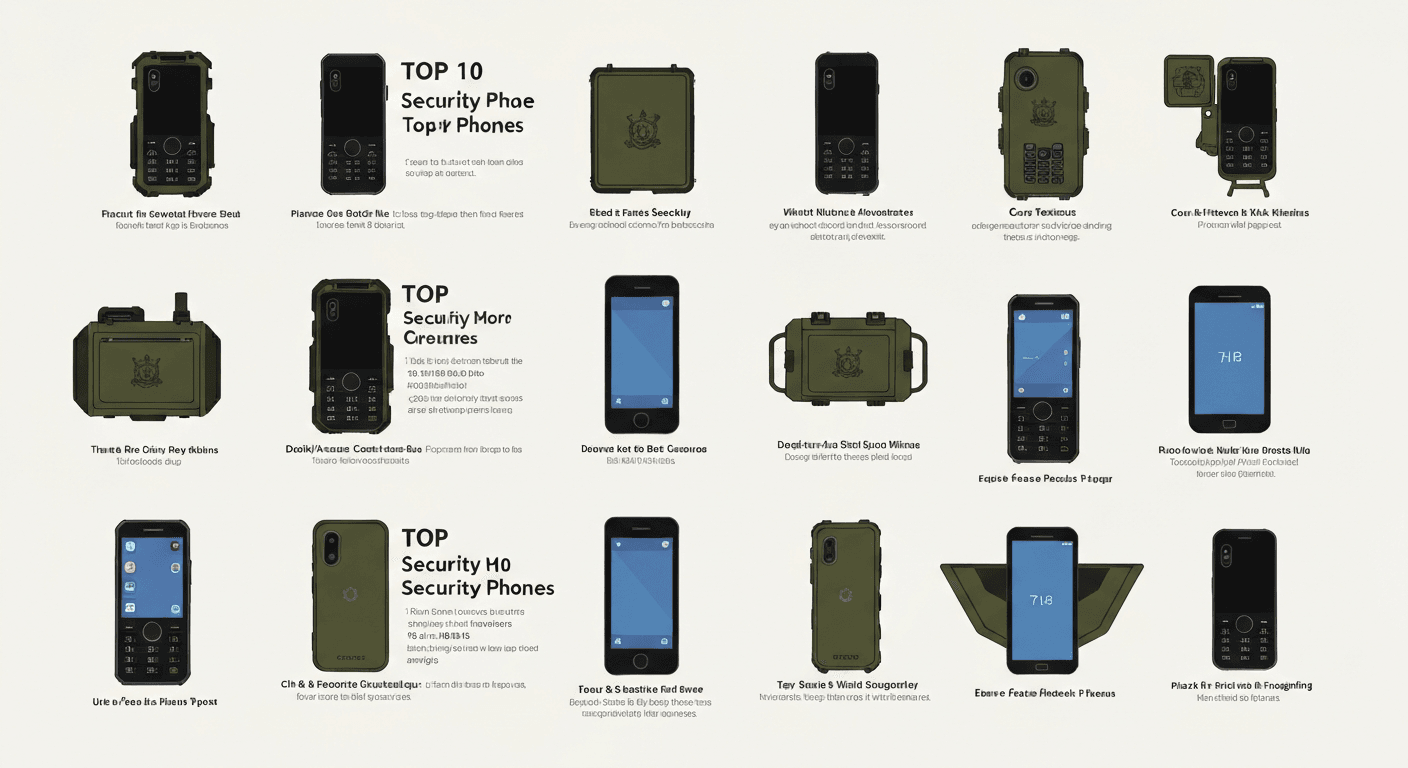 In the high-stakes arena of modern warfare, information is often your most valuable asset, and a compromised line can easily mean the difference between mission success and failure. While standard off-the-shelf smartphones offer convenience, they woefully lack the hardened defenses necessary to protect sensitive tactical data from sophisticated cyber threats. True operational security demands hardware built from the ground up to withstand both intense physical punishment and relentless digital espionage. This guide moves past standard consumer tech to explore what truly defines authentic military-grade communication. We have meticulously analyzed the market to bring you a comprehensive look at the Top 10 security phones for military use, specifically focusing on devices that offer advanced encryption, isolated operating systems, and robust hardware kill switches. Whether you are deployed in a hostile environment or managing sensitive logistics, discovering these specialized tools will ensure your communications remain an unbreakable lifeline. Let’s unpack the elite devices designed to go far beyond the basic.
Introduction: Beyond the Battlefield – The Evolving Landscape of Military Communication Security
In modern operations, information dominance is as critical as firepower. Here, ‘security' transcends basic passwords, demanding hardware-backed encryption and tamper-proof architecture. Standard consumer smartphones, despite their convenience, lack these robust defenses, leaving sensitive data vulnerable to interception.
This capability gap necessitates specialized “security phones” designed for the Intelligence & Special Ops Tier. Leading this charge is the Bittium Tough Mobile 2C, widely regarded as the gold standard for government-grade security. Used by military personnel and corporate executives, these devices offer “secure and discreet” operation essential for handling classified intel.
| Feature | Standard Consumer Phone | Military Security Phone |
|---|---|---|
| Encryption Level | Software-based (Standard) | Hardware-backed (Government-grade) |
| Use Case | General Communication | Intelligence & Special Ops |
| Data Integrity | Vulnerable to Exploits | Tamper-proof & Discreet |
The following guide analyzes the Top 10 security phones for military use, highlighting devices like the Bittium series that stand out for their ability to protect mission-critical data in high-stakes environments.
What Makes a Phone ‘Military-Grade'?
When compiling a list of the Top 10 security phones for military use, the term “military-grade” represents a critical convergence of physical resilience and impenetrable digital defense, far exceeding consumer standards.
Ruggedness and Durability: Surviving Extreme Environments
A tactical device must withstand the rigors of combat. This requires MIL-STD-810G/H compliance, certifying the phone can survive shock, vibration, and extreme thermal fluctuations. Additionally, high IP ratings are essential to ensure operability despite exposure to water, dust, and sand in field operations.
Hardware-Level Security: Beyond Software Encryption
True security begins at the component level. Devices like the Bittium Tough Mobile 2C are considered the gold standard for government-grade security. Designed for intelligence and special ops, this device integrates a hardware root of trust and a dedicated secure element to store cryptographic keys, ensuring that security is not solely dependent on the operating system.
Secure Operating Systems and Application Sandboxing
The OS must be hardened against exploits. The Bittium Tough Mobile 2 is widely utilized by government personnel for its ability to isolate sensitive data through strict application sandboxing and a customizable secure OS environment, preventing malware lateral movement.
End-to-End Encryption and Secure Communication Protocols
Reliable communication in denied environments is non-negotiable. Military personnel often rely on solutions like Wire, a messaging app known for its military-grade encryption and capability for anonymous use. While its feature-rich interface can be complex for beginners, it ensures that voice, video, and text remain unintelligible to interceptors.
Tamper Detection and Power Management
Advanced units feature physical tamper detection that triggers self-destruct mechanisms if the chassis is breached. Furthermore, extended battery life and efficient power management are vital for prolonged missions where charging infrastructure is unavailable.
| Feature | Consumer Smartphone | Military-Grade Device |
|---|---|---|
| Encryption Source | Software-based | Hardware-accelerated (Secure Element) |
| Physical Security | None | Tamper Detection & Self-Destruct |
| Durability | Standard IP68 | MIL-STD-810G/H Ruggedized |
| OS Environment | Generic Android/iOS | Hardened/Customizable (e.g., Bittium) |
Tamper Detection and Self-Destruct Mechanisms
Practical Implications: Devices with tamper detection and self-destruct mechanisms offer an ultimate line of defense against data compromise if physical security is breached. This is critical for preventing sensitive information from falling into enemy hands.
Actionable Tips:
1. Prioritize devices with physical tamper detection for missions involving high-risk environments or the handling of extremely sensitive classified information.
2. Ensure personnel are thoroughly trained on the implications and operational procedures related to tamper detection features to avoid accidental data wipes.
Extended Battery Life and Power Management
Practical Implications: Prolonged missions in remote or denied areas necessitate devices with exceptional battery life and efficient power management. This ensures continuous communication and operational capability without reliance on frequent charging.
Actionable Tips:
1. Select devices with optimized power management features and consider carrying spare, high-capacity batteries or portable charging solutions for extended deployments.
2. Train personnel on power-saving techniques specific to their device, such as disabling non-essential features and adjusting screen brightness, to maximize operational uptime.
Top 10 Security Phones for Military Use: A Deep Dive
In the modern theater of operations, information superiority is as critical as firepower. Standard consumer smartphones, while powerful, represent a significant vulnerability due to data leakage, location tracking, and unsecured supply chains. Consequently, the demand for the Top 10 security phones for military use has surged among defense agencies. These devices are not merely ruggedized; they are hardened at the firmware and hardware levels to protect sensitive data against state-sponsored cyber espionage.
1. Bittium Tough Mobile 2C: The Gold Standard for Government-Grade Security
إن Bittium Tough Mobile 2C stands as the apex of secure mobile computing, widely regarded as the gold standard for government-grade security. Designed specifically for the rigorous demands of intelligence, special operations, and corporate executives handling sensitive data, this device offers a unique dual-boot architecture that separates the operational environment from the secure environment.
Architecture and Hardware:
The device's defining feature is its hardware-based privacy mode. With a physical key, users can instantly disable microphones, cameras, and Bluetooth, severing potential surveillance vectors. The phone is built to endure, meeting MIL-STD-810G standards for shock and environmental resistance, ensuring reliability in hostile field conditions.
Software and Ecosystem:
The Tough Mobile 2C runs on two completely separate operating systems. One is a hardened Android version for standard administrative tasks, while the other is a secure, isolated OS for classified communications. This separation ensures that even if the public side is compromised, sensitive data remains air-gapped within the device.
Secure Communication Integration:
To maximize security, these devices are often deployed with encrypted communication platforms like Wire. Wire complements the Bittium hardware by providing military-grade encryption for messaging and voice calls. Its capability for anonymous use allows personnel to communicate without linking metadata to their physical identity—a critical feature for covert operations.
2. Samsung Galaxy S23 Tactical Edition
A favorite among conventional forces, the Tactical Edition integrates seamlessly with the Android Team Awareness Kit (ATAK). It features a “Stealth Mode” that disables LTE and e-911 for complete off-grid operation and connects easily with tactical radios and drone feeds, serving as a command hub on the soldier's chest.
3. Purism Librem 5 USA
Targeting users concerned with supply chain interdiction, the Librem 5 USA boasts electronics fabricated in the United States. It features three hardware kill switches that physically sever circuits to the camera, microphone, and WiFi/Bluetooth, offering verifiable privacy for command-level discussions.
4. Google Pixel 7 (GrapheneOS Edition)
While a consumer device by nature, a Pixel flashed with GrapheneOS is a top choice for privacy advocates and grey-zone operators. GrapheneOS hardens the memory allocator and removes all Google tracking services, providing a clean, silent operating environment ideal for low-profile missions.
5. Katim R01
Developed by DarkMatter, the Katim R01 is ruggedized to withstand extreme combat environments. Its USP is a tamper-proof active shield; if the device detects a physical intrusion attempt to access the internal components, it automatically wipes all encryption keys, rendering the data unrecoverable.
6. Silent Circle Blackphone PRIVY 2.0
The Blackphone series pioneered the “privacy-first” market. The latest iteration uses a modified OS that creates “Spaces”—virtual partitions that separate business data from personal apps. It is widely used by private military contractors requiring secure, compartmentalized communication.
7. Kyocera DuraForce Ultra 5G
For logistics and engineering corps, the DuraForce Ultra offers Class I, Div 2 hazardous location protection. While less focused on encryption than the Bittium, its durability and non-camera variants make it essential for working in classified facilities (SCIFs) where photography is prohibited.
8. Panasonic Toughbook FZ-T1
This handheld device bridges the gap between a phone and a tactical tablet. It is favored by logistics officers for its integrated barcode reader and extreme battery life, ensuring secure supply chain management in forward operating bases.
9. Sirin V3
The Sirin V3 focuses on financial and transactional security, featuring a built-in cold storage wallet. It is increasingly relevant for units handling cryptocurrency for field procurements or intelligence payments, ensuring assets cannot be siphoned remotely.
10. PinePhone Pro
Designed for the technical specialist, the PinePhone Pro runs on pure Linux. It allows for complete auditability of the code running on the device. While it lacks the polish of the Bittium, it offers total control for cyber-warfare specialists who need to run custom scripts and tools in the field.
Comparative Analysis of Key Security Devices
| Device | Primary Security Feature | OS Architecture | Target User Group |
|---|---|---|---|
| Bittium Tough Mobile 2C | Dual-boot OS & Hardware Privacy Mode | Dual Android (Public/Secure) | Intelligence, Special Ops, High-Level Gov |
| Samsung S23 Tactical | ATAK Integration & Stealth Mode | Hardened Android (Knox) | Infantry, Forward Command |
| Purism Librem 5 USA | Hardware Kill Switches & US Supply Chain | PureOS (Linux) | Privacy-Critical Command Staff |
| Katim R01 | Physical Tamper Self-Destruct | Hardened Android | Special Forces in Hostile Territory |
Beyond the Hardware: Secure Ecosystems and Software Solutions
Even the most rugged hardware found in the Top 10 security phones for military use relies on a robust software ecosystem to function effectively. A secure device is only as strong as the applications and operating systems running on it.
Secure Messaging and Collaboration Apps
Software solutions like Wire are critical for maintaining operational security. Wire offers military-grade encryption and supports anonymous use, ensuring that metadata—often as revealing as the content itself—remains protected. This level of security is essential for intelligence and special ops personnel who require feature-rich yet discreet communication channels that standard consumer apps cannot provide.
App Sandboxing and Secure OS Customization
إن Bittium Tough Mobile 2 and Bittium Tough Mobile 2C exemplify the “gold standard for government-grade security” through rigorous OS customization. These devices utilize strict app sandboxing and vetted app stores to prevent malware from compromising the system. By controlling the environment, they ensure that sensitive data handled by government users and corporate executives remains isolated from unauthorized access.
The Role of Trusted Network Infrastructure
Finally, secure devices must operate within a trusted network infrastructure to mitigate interception risks.
| Feature | Consumer Ecosystem | Secure Ecosystem (e.g., Bittium/Wire) |
|---|---|---|
| Encryption | Standard / Transit-only | End-to-End Military-Grade |
| App Vetting | Automated Screening | Strict Government-Grade Vetting |
| الهوية | User Profile Tracking | Anonymous & Discreet |
| Focus | User Engagement | Data Sovereignty & Security |
Maintaining secure channels requires a holistic approach, combining encrypted apps like Wire with the hardened architecture of devices like the Bittium Tough Mobile series.
App Sandboxing and Controlled Environments
Practical Implications: App sandboxing isolates applications, preventing malicious software from accessing data from other apps or the core operating system. Controlled environments ensure that only authorized and vetted applications can run, significantly reducing the attack surface.
Actionable Tips:
1. Prioritize devices that offer robust application sandboxing and allow for the creation of secure, isolated environments for sensitive applications.
2. Implement strict policies on application installation, utilizing vetted app stores or whitelisting approved applications to maintain a controlled operational environment.
Secure Operating System Customization and Updates
Practical Implications: Customized secure operating systems are tailored to remove unnecessary features and vulnerabilities present in standard OS builds. Regular, secure updates are crucial for patching newly discovered exploits and maintaining the integrity of the system.
Actionable Tips:
1. Opt for devices with customizable and hardened operating systems that can be specifically configured for military requirements, minimizing potential attack vectors.
2. Establish a rigorous patch management process to ensure timely and secure deployment of OS and application updates, maintaining the highest level of security.
User Experience and Practical Considerations for Military Personnel
When evaluating the Top 10 security phones for military use, operational efficiency is just as critical as data protection.
Ease of Use vs. Uncompromising Security
Devices like the Bittium Tough Mobile 2C set the “gold standard” by balancing government-grade security with the need for intuitive interfaces, ensuring personnel can operate discreetly under pressure.
Training and Adoption Challenges
Advanced tools require adaptation. While apps like Wire provide military-grade encryption, their feature-rich nature may present a learning curve compared to standard consumer apps.
Integration with Existing Military Systems
Selected devices must integrate seamlessly with existing command structures.
Practical Implications: Seamless integration ensures that new secure devices can be readily adopted and utilized within existing communication networks and operational workflows, minimizing disruption and maximizing effectiveness.
Actionable Tips:
1. Conduct thorough compatibility testing to ensure chosen devices and software integrate smoothly with existing military communication systems, command and control platforms, and tactical data links.
2. Involve IT and operational units early in the selection process to identify potential integration challenges and ensure that chosen solutions meet the technical and operational requirements of the force.
Cost and Lifecycle Management
Long-term value relies on durability and specialized support.
| Feature | Bittium Tough Mobile 2 | Standard Consumer Phone |
|---|---|---|
| Security Foundation | Hardware-based, Government-grade | Software-based, General |
| Target Audience | Intelligence & Special Ops | General Public |
| Data Handling | Sensitive/Classified | Personal/Commercial |
FAQ (Frequently Asked Questions)
Q1: What is the primary difference between a consumer smartphone and a security phone for military use?
A1: The primary difference lies in their design philosophy and security architecture. Consumer smartphones prioritize user experience, features, and affordability, relying heavily on software-based security that is often vulnerable. Military security phones, on the other hand, are built from the ground up with hardware-level security, rigorous encryption, tamper-proof features, hardened operating systems, and extreme durability to withstand combat environments and protect highly classified information from advanced threats.
Q2: Are devices like the Bittium Tough Mobile 2C truly “unhackable”?
A2: No single device is definitively “unhackable.” However, devices like the Bittium Tough Mobile 2C are designed to be exceptionally resistant to known and emerging cyber threats. Their multi-layered security, including hardware root of trust, secure elements, dual-boot architecture, and physical privacy features, makes them orders of magnitude more secure than consumer devices. The goal is to create an extremely high barrier to entry for attackers, making compromise impractical or impossible for most adversaries.
Q3: How important is physical ruggedness for military security phones?
A3: Physical ruggedness is paramount. Military operations frequently expose devices to extreme conditions such as drops, impacts, water, dust, and temperature fluctuations. Devices that meet MIL-STD-810G/H standards and have high IP ratings are essential for ensuring that the device remains functional and its security features intact, even under duress. A compromised device due to physical damage is as dangerous as a digitally compromised one.
Q4: Can standard secure messaging apps like Signal or WhatsApp provide sufficient security for military use?
A4: While apps like Signal offer strong end-to-end encryption, they are generally designed for consumer-level privacy and may not meet the stringent requirements for military-grade security. Military operations often involve handling classified information that requires hardware-backed encryption, secure operating system environments, and protection against advanced persistent threats. Apps like Wire, which are specifically designed for enterprise and government use with features like anonymous operation and military-grade encryption, are more appropriate for these scenarios, especially when paired with a secure hardware platform.
Q5: What are hardware kill switches and why are they important for military security phones?
A5: Hardware kill switches are physical switches on a device that can instantly and permanently disable specific components like cameras, microphones, Wi-Fi, or Bluetooth. This is crucial for military personnel operating in highly sensitive environments where even the slightest risk of unauthorized data exfiltration or surveillance is unacceptable. By physically severing the circuit, these switches provide a guaranteed level of privacy and security that software alone cannot match.
Conclusion: The Future of Secure Military Communication
Choosing the right mobile device for defense operations is a complex decision that requires balancing cutting-edge technology with harsh operational realities. Throughout our detailed analysis of the Top 10 security phones for military use, we have demonstrated that securing the modern battlespace goes far beyond basic encryption. From the fortress-like architecture of the Bittium Tough Mobile 2C to the diverse capabilities found across our ranked list, each device represents a critical leap forward in safeguarding sensitive intelligence against sophisticated adversaries.
As cyber threats evolve, so too must the countermeasures we deploy. However, reliance on hardware alone is insufficient. To ensure mission success, military leaders must embrace a holistic security strategy. This means integrating these robust devices with secure software ecosystems and reinforcing them with comprehensive user training. We strongly recommend that procurement officers assess their specific mission profiles and compatibility requirements before making a final decision. Prioritize vendors that offer long-term support and adaptable security protocols to future-proof your communications.
By taking these proactive steps, you empower your personnel with the tools they need to operate safely and effectively in an increasingly connected world. Do not leave your operational security to chance. Contact our team of experts today to discuss your specific requirements, and let us help you select the ideal secure communication solution for your force.